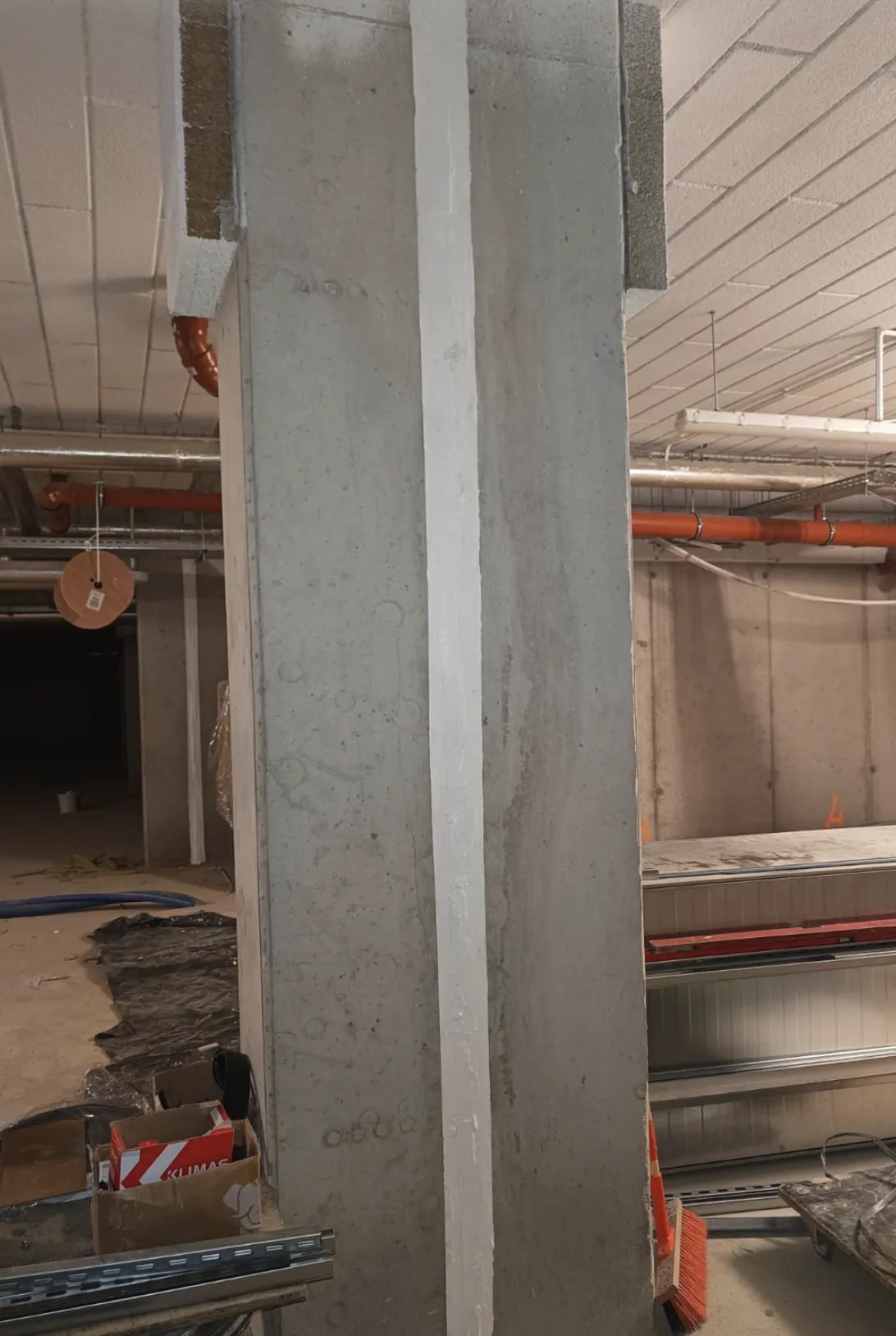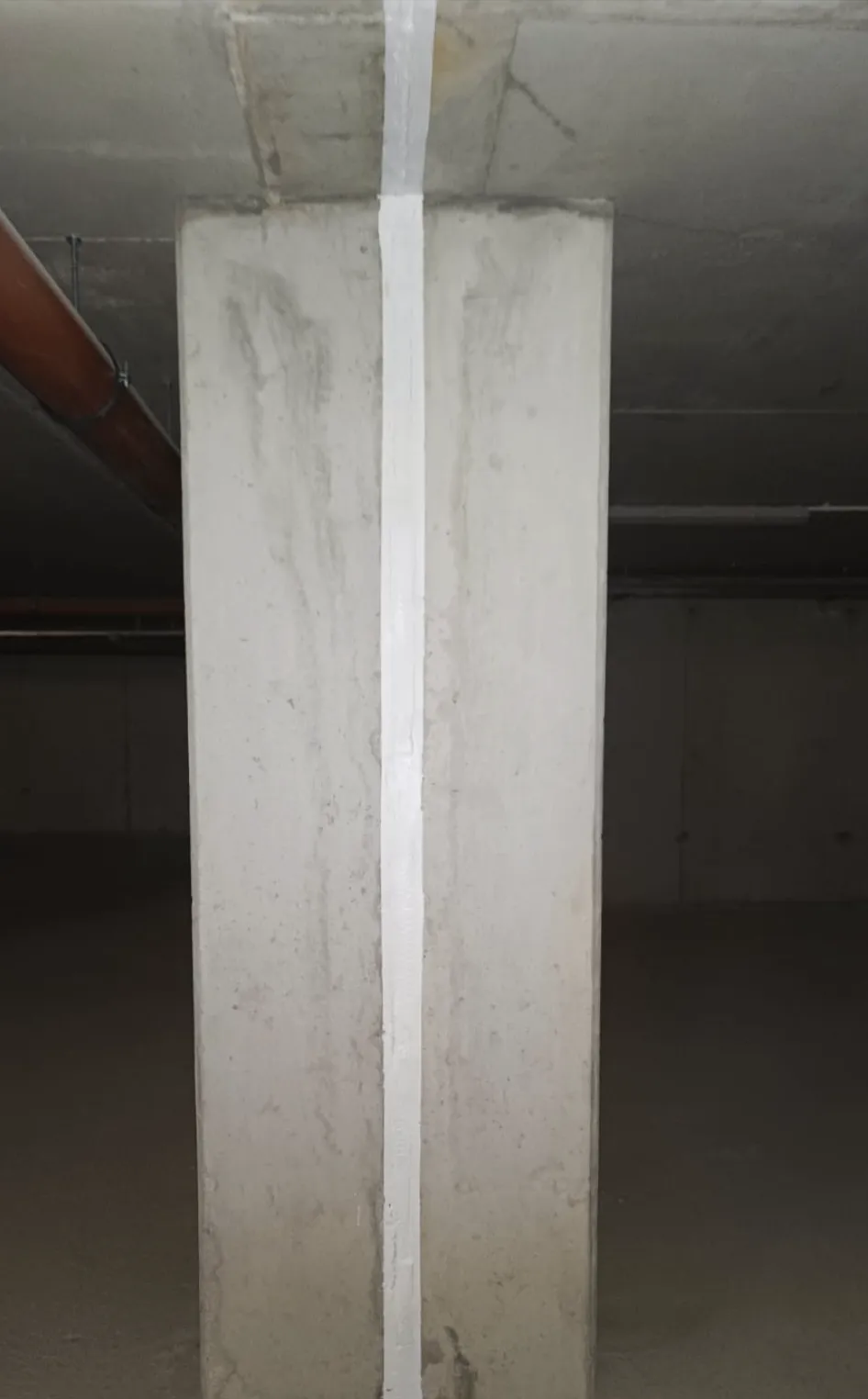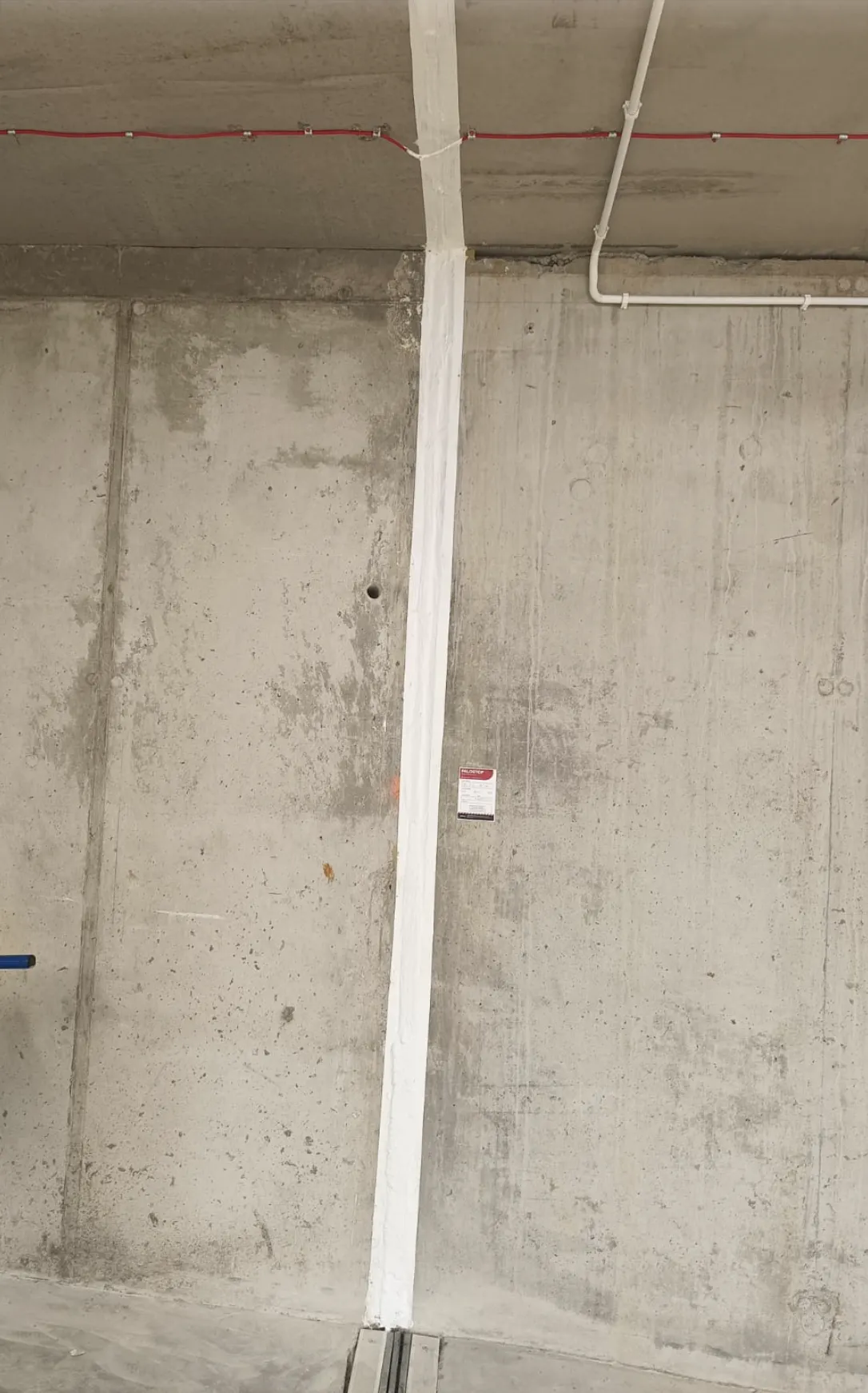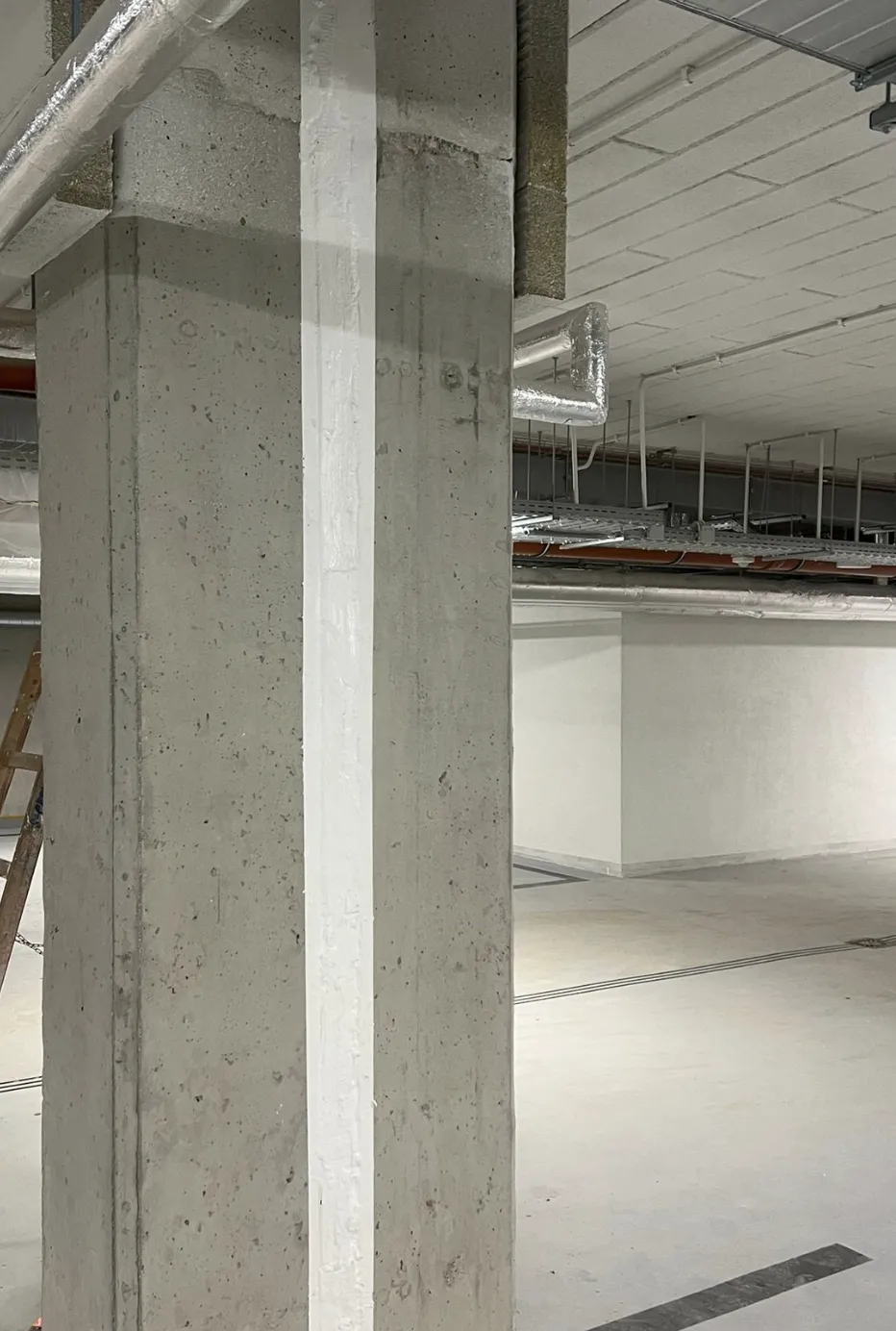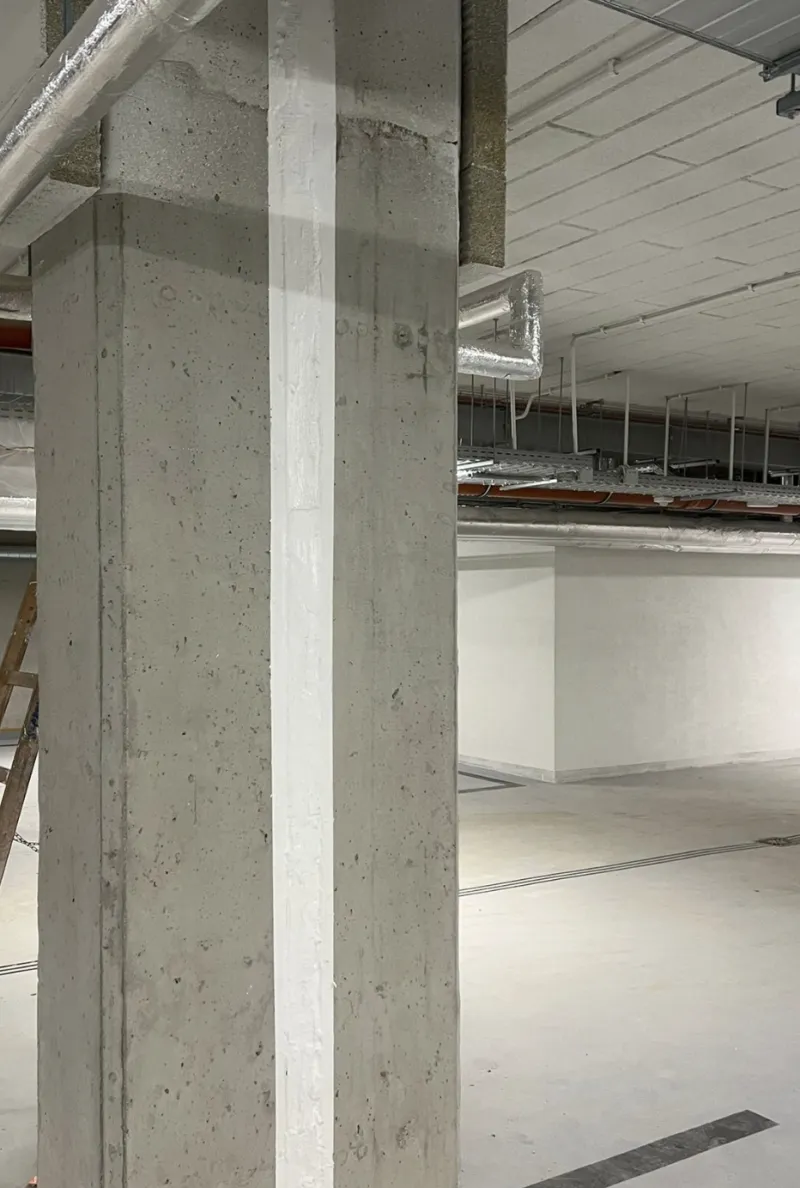
Expansion joints are used in buildings, among other things, to allow individual parts of the structure to work safely and to limit the effects of their movement and deformation. In buildings divided into fire compartments, expansion joints in fire-separating walls or floors must be protected with an appropriate fire-rated seal.
We install fire-rated expansion joint seals using proprietary systems designed for the specific type of wall or floor and the required fire resistance class. The method is selected according to factors such as the joint width, the type of structure and the performance required for the specific building.
Fire resistance class of expansion joints
The fire resistance class of an expansion joint is specified in the design documentation. Depending on the requirements, it may be, for example, EI 60, EI 120 or EI 240.
The fire resistance class designation is made up of the following parameters:
- E – integrity – the ability of an element to limit the passage of flames and hot gases,
- I – insulation – the ability of an element to limit the temperature rise on the unexposed side,
- 120 / 240 – time in minutes for which the element or seal retains the required properties under fire conditions.
Cross-section: sealed expansion joint
EI 240 both criteria met
Standard fire curve (ISO 834)
drag across the chart
- E Integrity
- No flames or hot gases pass through to the unexposed side – among other things, the test checks whether a cotton pad held against it ignites.
- I Insulation
- The temperature on the unexposed side rises only within a limited range – by no more than 180 K at the measuring points.
- 60–240 Time in minutes
- How long the protection meets both criteria while the furnace temperature rises along the standard fire curve.
The required fire resistance class depends on the function of the wall or floor, the characteristics of the building and the design solutions adopted. That is why every expansion joint seal should be installed using an appropriate, tested fire protection system that meets the technical requirements of the application.
We seal expansion joints in walls and floors, adapting the installation method to the construction of the separating element and the required fire resistance class.